Does Aspirin Help You Sleep? What the Research Actually Says
I almost scrolled past it. “Does Aspirin Help You Sleep?”
A post on X, someone taking a baby aspirin before bed, waking up more rested than they had in months. The replies kept coming. Not two or three accounts — dozens. Some had been doing it for years. Some had started that week and already noticed something.
My gut reaction was dismissal. But I’ve been wrong enough times about things that sound ridiculous that I don’t dismiss patterns anymore — I read the research first.
So I did. And the answer turned out to be genuinely strange.
The clinical studies mostly show aspirin disrupts sleep. But a 2024 Harvard trial found low-dose aspirin reduces the inflammation that comes from sleep restriction and improves how well people recover during subsequent sleep. And the X reports are almost entirely from people who are chronically inflamed or chronically sleep-deprived — which is a different population than the healthy subjects in controlled lab conditions.
That’s not a contradiction. But you have to follow the mechanism to see why.
So does aspirin help you sleep? lets explore!
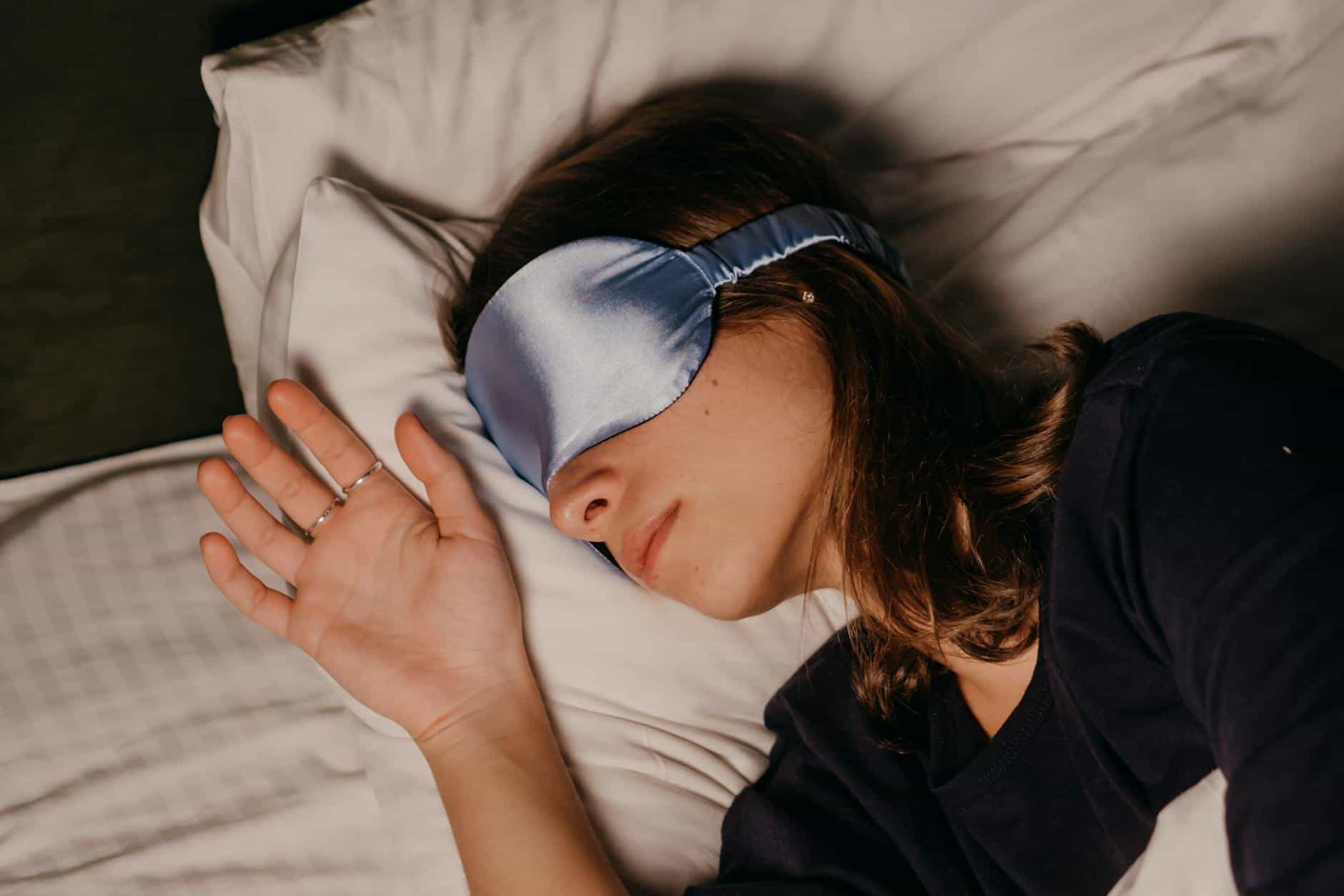
What Aspirin Does That Matters for Sleep
When you take aspirin, you’re blocking the enzyme (COX) your body uses to make prostaglandins. Block the enzyme, less prostaglandins. That’s the mechanism behind the anti-inflammatory effect, the fever reduction, the pain relief.
Prostaglandins are involved in a lot more than inflammation, though. They’re part of how your body regulates core temperature at night — and that temperature drop is required for deep sleep. They’re also implicated in the homeostatic pressure that builds throughout the day and makes you sleepy by evening.
So aspirin isn’t just quieting inflammation. It’s also interfering with some of the signaling your body uses to manage sleep ques That creates a split outcome depending on where you’re starting from.
What the Clinical Research Shows — and Why It Seems Contradictory
The older literature is not subtle about this: in healthy people, aspirin makes sleep worse.
Thirty-seven healthy subjects were tested. Half got aspirin, ibuprofen, acetaminophen, or placebo. The aspirin group woke up more during the night, spent more time in light sleep, and had worse sleep efficiency than placebo. Ibuprofen did the same thing.
An earlier study, 1980, in the research record, ran people on 600mg of aspirin three times daily for four days. Slow-wave sleep dropped. The disruption carried into recovery nights after they stopped taking it.
The mechanism is documented separately. A PubMed study on NSAIDs and thermoregulation found aspirin blunted the nocturnal body temperature drop and suppressed melatonin levels. Both of these are prerequisites for getting into deep sleep. Less melatonin, flatter temperature curve — and you get lighter, more fragmented sleep.
The case against aspirin for sleep in healthy people is pretty strong. That much is clear.
The 2024 Harvard Study That Changes the Picture
This is the result I didn’t see coming.
A randomized placebo-controlled crossover trial from Harvard Medical School
Published in 2024 put 46 healthy adults through three conditions: normal sleep with placebo, sleep restriction with placebo, and sleep restriction with 81mg aspirin daily.
Five nights of four-hour sleep opportunities. Genuinely brutal.
In the sleep-restricted group taking aspirin:
⬇️CRP came down,
⬇️IL-6 expression dropped,
⬇️COX-1/COX-2 co-expression in immune cells fell.
⬇️wake-after-sleep-onset decreased
Sleep efficiency improved compared to the placebo/sleep-restriction condition.
The counter-inflammatory effects were still present after recovery sleep. Not just acute — persisting.
So in sleep-restricted, inflamed people: low-dose aspirin reduced the inflammation caused by poor sleep and improved how well they recovered when they finally got the chance to sleep. The people on X reporting better sleep are probably, in many cases, in exactly this population. Chronic inflammation, chronic sleep restriction, aspirin breaking part of the feedback loop.
In healthy well-rested volunteers in a lab: sleep gets worse. In chronically sleep-deprived inflamed people: recovery sleep gets better. Both can be true simultaneously.
The Inflammation-Sleep Loop
Poor sleep causes inflammation. Chronic inflammation disrupts sleep. They feed each other and most people are stuck in this loop without knowing it.
Sleep restriction activates the NF-kB signaling pathway, which drives up IL-6 and CRP. It also upregulates COX-2 in immune cells — producing more prostaglandins, which fragment sleep further. Aspirin hits COX, breaks part of that cascade, and the loop weakens.
This connects to what’s covered in the how to detox your body guide — chronic stress, poor sleep, and systemic inflammation aren’t separate problems. They’re the same problem cycling through different biology.
For someone stuck in that loop, baby aspirin before bed isn’t magic. It’s targeting something real.

The Temperature Angle
The body needs to drop its core temperature by roughly one degree Celsius to initiate and maintain deep sleep. Prostaglandins help regulate that nocturnal cooling. Block prostaglandins with aspirin and you can blunt the drop.
The PubMed thermoregulation study measured this directly: the normal nighttime temperature decrease was significantly attenuated, and melatonin was suppressed. Flatter temperature curve, less melatonin — the physiology for deep sleep doesn’t fire properly.
This is probably the main mechanism behind aspirin disrupting sleep in healthy people. And it’s why dose and timing almost certainly matter. 81mg taken earlier in the day might behave very differently from 325mg taken at bedtime, right when your body is trying to initiate the temperature drop it needs.
The people on X who report benefits are almost all taking baby aspirin. That’s probably not a coincidence.
Bedtime vs Morning Dosing
A 2024 PMC review on aspirin timing found that when you take aspirin the sleep implications of timing haven’t been specifically studied, but the mechanism is suggestive.
Morning dosing might preserve some of the nocturnal prostaglandin activity needed for temperature regulation and melatonin, while still delivering anti-inflammatory benefit over the day. Night dosing hits inflammation more directly but also potentially blunts the signals needed for sleep onset.
Bedtime aspirin produces stronger overnight platelet inhibition than morning dosing — which means it’s also blocking prostaglandins more aggressively during the hours when your body needs them for temperature regulation and melatonin production. That’s not a sleep study, but it tells you something about what the timing does
There’s no clean trial answering this question specifically for sleep. Based on the mechanistic data, morning or early afternoon looks like the safer bet if better sleep is the goal rather than acute pain relief.
Who This Might Actually Help
People with chronic low-grade inflammation. If your baseline involves elevated CRP, joint aches, metabolic or gut-driven inflammation — the inflammatory cascade that aspirin interrupts is probably disrupting your sleep architecture. Breaking part of that loop might help.
People with chronic sleep restriction. That’s what the Harvard trial tested. If you’re consistently getting five or six hours, the inflammatory response to that sleep debt is real, and aspirin reduced it meaningfully in that population.
People with pain keeping them awake. Simpler mechanism. Aspirin reduces pain. Less pain disrupting sleep = better sleep.
Not healthy people who already sleep well. The older clinical literature is consistent. In healthy, well-rested people, aspirin disrupts sleep. The benefit case doesn’t apply.
For sleep support that works through a more direct mechanism, natural ways to increase melatonin is worth reading alongside this. And for supplement protocols, best form of magnesium for sleep has better safety profile data for most people.
FAQ
Does aspirin help you sleep? Depends where you’re starting from, as covered above. In healthy people the clinical studies are pretty clear, it makes sleep worse by suppressing melatonin and blunting the temperature drop. In chronically sleep-restricted or inflamed people, that 2024 Harvard trial found it helped recovery sleep. Both things are real, just in different populations.
Why do people on X report better sleep from baby aspirin? Probably because most of them are in the second population; chronically inflamed, chronically short on sleep, stuck in the feedback loop between poor sleep and elevated inflammation. Aspirin breaks part of that loop. That’s my best read on it anyway.
What’s the right dose? The Harvard trial used 81mg. Full-dose aspirin (325mg+) has a stronger prostaglandin-blocking effect that’s more likely to blunt the temperature and melatonin signals you need for deep sleep. If you’re experimenting with this, lower dose and earlier in the day makes more mechanistic sense than high dose at bedtime.
Does timing matter? Probably yes, though there’s no clean sleep-specific trial on this. The mechanism suggests nighttime dosing hits the nocturnal physiology you’re trying to protect. Morning or afternoon dosing seems safer from that angle.
Is it safe to take every night? Daily aspirin has real GI and bleeding risks that compound over time. The FDA walked back its recommendation for daily aspirin in low-risk people in 2022 for this reason. This isn’t a casual biohack — it warrants proper medical input if you’re thinking about daily use.
Are there better options for sleep? For the inflammation angle, addressing what’s causing the chronic inflammation is more sustainable than daily aspirin. For sleep quality directly, magnesium glycinate has a cleaner safety profile and reasonably good data. The melatonin timing approach is worth exploring too. Aspirin is the more interesting mechanism — it’s not necessarily the better intervention.
Maxwell Person is an aerospace engineer who spent his mid-20s chronically ill and years afterward reading the research to figure out what actually worked. He writes for people who want evidence without the wellness fluff.
References
Engert LC, et al. Effects of low-dose acetylsalicylic acid on the inflammatory response to experimental sleep restriction in healthy humans. Brain Behav Immun. 2024. PMID 39043348
Murphy PJ, et al. Nonsteroidal anti-inflammatory drugs affect normal sleep patterns in humans. PubMed 1994. PMID 8047572
Murphy PJ, et al. Nonsteroidal anti-inflammatory drugs alter body temperature and suppress melatonin in humans. PubMed 1996. PMID 8848472
Aspirin and human sleep. PubMed 1980. PMID 6158420
Acetylsalicylic acid dosed at bedtime vs. dosed in the morning. PMC 2024. PMC11536354
Discover more from Maxwell Person
Subscribe to get the latest posts sent to your email.