You know what’s frustrating?
Training hard for months.
Eating right.
Following every piece of advice.
And your gains just… disappear.
Meanwhile, some people seem to build muscle effortlessly.
What’s the difference?
Maybe it’s that “healthy” vitamin C you’re taking every day.
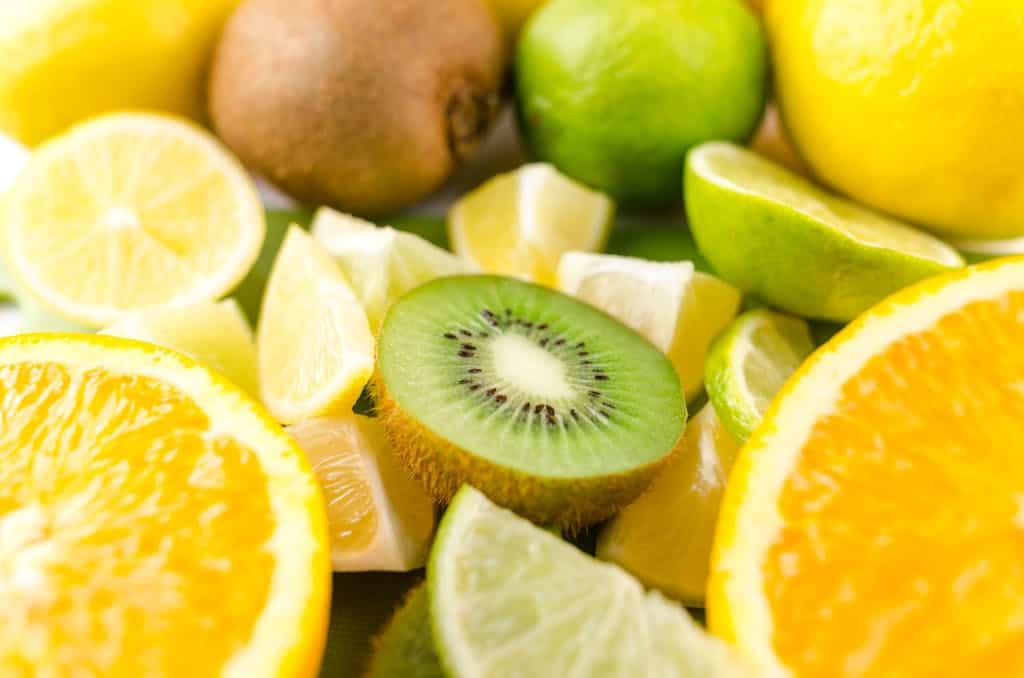
The Supplement Trap Most People Fall Into
Walk into any supplement store and they’ll tell you the same thing.
“Take more antioxidants!”
“Vitamin C boosts recovery!”
“Higher doses = better results!”
Complete nonsense.
But it sounds logical, right?
Antioxidants fight free radicals.
Free radicals cause damage.
Less damage = better recovery.
Wrong.
High doses of vitamin C can actually stop muscle growth.
Your muscles need some “damage” to grow.
It’s called adaptation.
Why Your Muscles Need Stress to Grow
This might sound backwards, but stick with me.
When you lift weights, your muscle cells produce reactive oxygen species.
Most people call these “free radicals.”
Everyone thinks they’re bad.
They’re not.
These molecules are actually growth signals.
They tell your muscles: “Get stronger!”

Without these signals, adaptation stops.
No signals = no growth.
Vitamin C at high doses silences these signals.
It’s like unplugging your muscle-building machinery.
The Research That Changes Everything
Scientists tracked 32 people through 10 weeks of resistance training.
Half took 1000mg vitamin C plus vitamin E daily.
Half took nothing.
The results were shocking.
The supplement group’s muscle-building signals dropped by 70%.
Seventy percent!
Both groups gained similar muscle mass.
But the supplement group got way less strong.
Their muscles grew but didn’t function better.
That’s not normal adaptation.
Another study on older men was even worse.
Control group: 3.9% increase in muscle mass.
Supplement group: 1.4% increase.
Almost three times less growth from the same training.
The Danger Zone for Vitamin C Dosing
Not all vitamin C kills gains.
The dose matters.
A lot.
The trouble starts around 1000mg daily.
Most supplement labels pack way more than this.
Here’s the breakdown:
- Under 200mg: Safe for muscle growth
- 200-500mg: Probably fine
- 500-1000mg: Risky territory
- Over 1000mg: Proven gain killer
Check your supplements right now.
Many contain 1000mg or more per serving.
Some “high-potency” versions have 2000mg or higher.
That’s muscle growth suicide.
The National Institutes of Health recommends only 90mg daily for men.
Most supplements give you 10-20 times that amount.
Timing Can Make or Break Your Results
Even moderate doses hurt if timed wrong.
Never take vitamin C within three hours of training.
This is when your muscles are most sensitive to growth signals.
Taking antioxidants during this window shuts down adaptation.
Better timing options:
- Early morning (if you train at night)
- Before bed (if you train in the morning)
- Rest days only
The goal is maximum separation from your workout.
Sports medicine research supports avoiding antioxidants around training times.

Food Sources Don’t Cause Problems
Here’s something interesting.
Vitamin C from whole foods doesn’t interfere with muscle growth.
Why?
An orange contains about 70mg of vitamin C.
You’d need to eat 15 oranges to hit 1000mg.
That’s not happening.
Plus, fruits contain hundreds of other compounds.
Bioflavonoids.
Phytonutrients.
Fiber.
These work together in protective ways.
Studies comparing food vs supplements show food sources don’t cause the same problems.
Stick to real food and you’re safe.
The Antioxidant Industry’s Big Lie
The supplement industry has sold us on a false idea.
“More antioxidants = better health.”
This is wrong.
Your body needs balance, not maximum antioxidation.
Some oxidative stress is good.
It triggers positive adaptations.
Exercise creates oxidative stress.
Cold exposure creates oxidative stress.
Fasting creates oxidative stress.
All of these make you stronger.
Zero stress makes you weak.
Your muscles work the same way.
Research published in Nature explains how reactive oxygen species serve as essential signaling molecules.
Block them completely and you block progress.
Other Supplements That Kill Gains
Vitamin C isn’t the only problem.
Vitamin E shows the same muscle-blocking effects.
Most damaging studies used both vitamins together.
The combination is particularly bad.
Other supplements to watch:
- High-dose vitamin E (400+ IU)
- NAC (N-acetylcysteine) in large amounts
- Alpha-lipoic acid megadoses
- Synthetic beta-carotene
Natural antioxidants from food work differently.
They don’t seem to cause interference.
What About Coffee and Tea?
Good question.
Coffee and tea contain lots of antioxidants.
But they work through different pathways.
They activate your body’s natural antioxidant systems.
They don’t directly neutralize everything like vitamin C pills.
Research confirms that coffee and tea don’t hurt muscle growth.
Keep drinking them.
Warning Signs You’re Taking Too Much
Watch for these red flags:
Strength gains have plateaued for months.
You never feel sore after hard workouts.
You’re taking 1000mg of vitamin C daily.
You time supplements around training sessions.
You stack multiple antioxidant products.
If any of these apply, your supplements might be sabotaging your results.
The Smart Approach to Vitamin C
Here’s what works:
Get 200-300mg daily from food sources.
Eat 5+ servings of fruits and vegetables.
Avoid high-dose supplements during training phases.
Save them for when you’re actually sick.
Time any supplements away from workouts.
At least 3 hours separation.
Track your strength progression weekly.
If gains stall, examine your supplement routine first.
Trust results, not marketing claims.
Your body doesn’t lie.
Common Questions and Straight Answers
“Should I throw out my vitamin C supplements?”
Not necessarily. Use them when sick. Just not daily during training blocks.
“What about my multivitamin?”
Check the vitamin C content. Most have 60-90mg, which is fine. Avoid “high-potency” versions with 500mg+.
“How quickly will I see improvements?”
Most people notice better strength gains within 2-4 weeks of optimizing vitamin C intake.
“What if I get sick without supplements?”
Short-term higher doses (500-1000mg) during illness are probably fine. Just don’t make it a habit.
“Are any antioxidant supplements safe?”
Natural ones from whole food sources seem okay. Isolated, high-dose synthetic versions cause problems.
The Bottom Line on Vitamin C and Muscle Growth
Less really is more with vitamin C supplementation.
Your muscles need some oxidative stress to adapt.
High-dose antioxidants eliminate that stress.
The supplement industry profits from selling you more.
Science says you need less.
Way less.
Get your vitamin C from food.
Time any supplements away from training.
Watch your muscle growth accelerate.
Remember: optimal isn’t maximal when it comes to vitamin C and muscle growth.
References
- Paulsen, G., et al. (2014). Vitamin C and E supplementation alters protein signalling after a strength training session, but not muscle growth during 10 weeks of training. Journal of Physiology, 592(24), 5391-5408. https://physoc.onlinelibrary.wiley.com/doi/abs/10.1113/jphysiol.2014.279950
- Björnsen, T., et al. (2016). Vitamin C and E supplementation blunts increases in total lean body mass in elderly men after strength training. Scandinavian Journal of Medicine & Science in Sports, 26(7), 755-763. https://pubmed.ncbi.nlm.nih.gov/26129928/
- Dutra, M. T., et al. (2020). The Effects of Strength Training Combined with Vitamin C and E Supplementation on Skeletal Muscle Mass and Strength: A Systematic Review and Meta-Analysis. Journal of Sports Medicine, 2020, 3505209. https://www.hindawi.com/journals/jsm/2020/3505209/
- Powers, S. K., et al. (2010). Reactive oxygen species are signalling molecules for skeletal muscle adaptation. Experimental Physiology, 95(1), 1-9. https://pmc.ncbi.nlm.nih.gov/articles/PMC2906150/
- Gomez-Cabrera, M. C., et al. (2008). Oral administration of vitamin C decreases muscle mitochondrial biogenesis and hampers training-induced adaptations in endurance performance. American Journal of Clinical Nutrition, 87(1), 142-149. https://pubmed.ncbi.nlm.nih.gov/18175748/
- Carr, A. C., & Vissers, M. C. (2013). Synthetic or food-derived vitamin C—are they equally bioavailable? Nutrients, 5(11), 4284-4304. https://pmc.ncbi.nlm.nih.gov/articles/PMC3847730/
- Sies, H., et al. (2020). Reactive oxygen species (ROS) as pleiotropic physiological signalling agents. Nature Reviews Molecular Cell Biology, 21(7), 363-383. https://www.nature.com/articles/s41580-020-0230-3
- Ristow, M., et al. (2009). Antioxidants prevent health-promoting effects of physical exercise in humans. Proceedings of the National Academy of Sciences, 106(21), 8665-8670. https://www.pnas.org/doi/10.1073/pnas.0903485106
- Morrison, D., et al. (2015). Vitamin C and E supplementation prevents some of the cellular adaptations to endurance-training in humans. Free Radical Biology and Medicine, 89, 852-862. https://pubmed.ncbi.nlm.nih.gov/26482865/
- National Institutes of Health Office of Dietary Supplements. (2021). Vitamin C: Fact Sheet for Health Professionals. https://ods.od.nih.gov/factsheets/VitaminC-HealthProfessional/
Discover more from Maxwell Person
Subscribe to get the latest posts sent to your email.